

The "Steel Fortress" Amid Thousand-Degree Furnace Flames: An In-Depth Analysis of Shandong Xingyuan Machinery's YZ Type Metallurgical Casting Crane
Release time:
2026-05-09
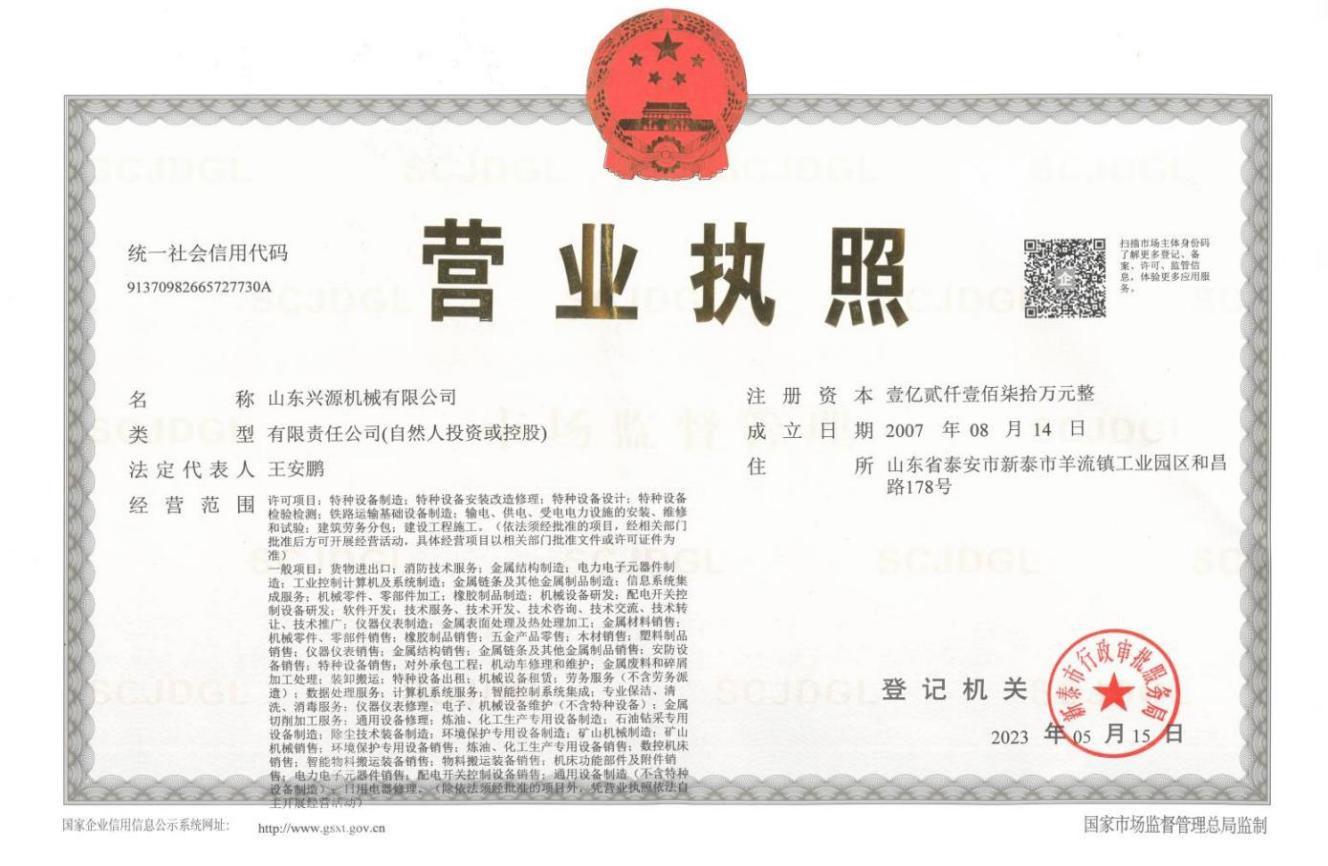
In industries such as steel smelting and non-ferrous metal casting, the lifting and transport of molten metal is the most critical and high-risk link in the production process. The temperature of molten iron and molten steel exceeds 1600°C, and the safety and reliability of the cranes that handle this "liquid fire" directly impact personnel safety and the continuous stability of production. As a holder of the National Class A Special Equipment Manufacturing License, Shandong Xingyuan Machinery Co., Ltd. (hereinafter referred to as "Xingyuan Machinery") draws on its profound technical expertise and ultimate pursuit of safe production to meticulously engineer the YZ type metallurgical casting crane. This product is strictly designed and manufactured in accordance with the national mandatory standards for metallurgical cranes. With high-temperature resistance, strong redundancy, and high reliability as its core advantages, it is an indispensable piece of key equipment for the steel smelting, casting, and hot processing industries.
Product Definition: Specialized Equipment Born for the "Fiery Industry"
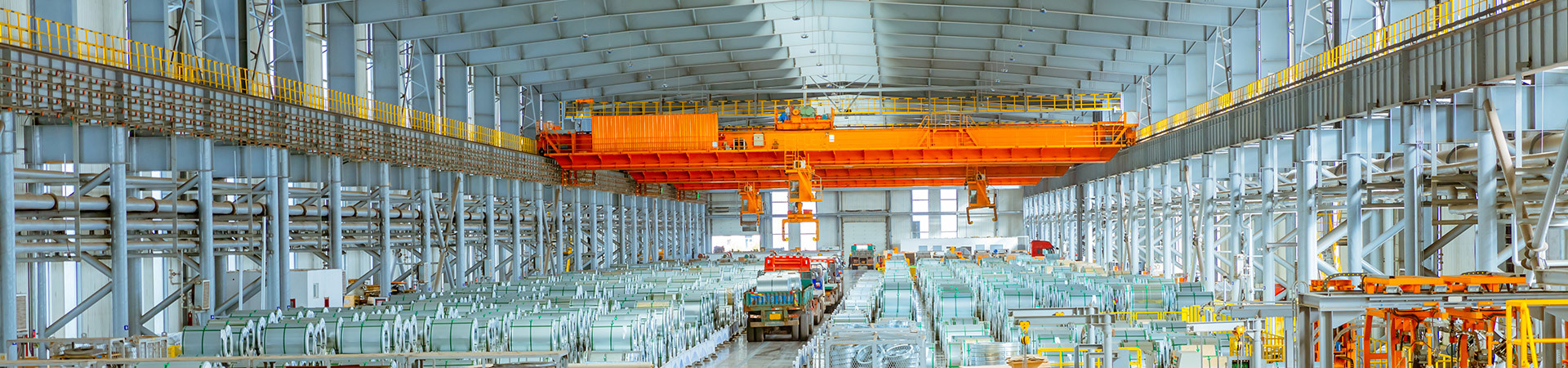
The YZ type metallurgical casting crane is a specialized lifting device that has been technically upgraded from the standard QD type overhead crane to address the specific operating conditions of the metallurgical and casting industries—high temperatures, heavy dust, and continuous operation. It serves as the "arterial lifeline" connecting the ironmaking, steelmaking, and continuous casting processes, and is primarily used for lifting and transporting high-temperature materials such as molten metal (hot metal ladles, molten steel ladles), incandescent steel billets, and red-hot ingots.
Core Positioning:
Dimension | Characteristic Description |
|---|---|
Applicable Scenarios | Steel smelting workshops, foundries, hot rolling mills, non-ferrous metal processing |
Lifting Objects | Hot metal ladles, molten steel ladles, tundishes, red-hot steel billets, incandescent castings |
Lifting Capacity Range | 75t – 500t (four-girder structure, main and auxiliary hook configuration) |
Span Range | 7.5m – 31.5m (customizable according to plant dimensions) |
Lifting Height | 12m – 30m (customizable according to workshop height) |
Work Duty Classification | A7 (Extra Heavy Duty), A8 (Super Heavy Duty) |
Safety Standards | AQSIQ Special [2007] No. 375 Document; JB/T 7688 Technical Conditions for Metallurgical Cranes |
In the metallurgical industry, a warning circulates: "General-purpose cranes are absolutely forbidden from entering high-temperature casting workshops." The YZ type is a professional solution born precisely to eliminate this safety risk—safeguarding every single lift of molten metal with the highest level of safety redundancy.
Core Advantages: Six Dimensions Forging the "Steel Guardian"
Offset-Rail Box-Section Girder Structure: Keeping the Main Girder Away from Heat Radiation
The primary feature that distinguishes the YZ type metallurgical crane from the general-purpose QD type is its offset-rail box-section girder structure:
Optimized Trolley Rail Position: The trolley rail is positioned directly above the main girder web plate, rather than at the center of the main girder, keeping the main girder body away from the heat radiation zone of the molten steel ladle.
Thermal Deformation Control: The offset-rail design effectively reduces the thermal deformation of the main girder after exposure to heat radiation, ensuring the operating accuracy of the crane in high-temperature environments.
Extended Structural Life: Keeping the main girder away from high-temperature zones significantly extends the fatigue life of the metal structure.
High-Temperature Resistant Design: Standing Firm Against Thousand-Degree Furnace Heat
The greatest challenge in a metallurgical workshop comes from the intense thermal radiation of molten steel and hot metal. A 1600°C molten steel ladle radiates enough heat to deform the main girder of an ordinary crane and cause electrical components to fail. Xingyuan Machinery's YZ type metallurgical crane builds a comprehensive thermal insulation barrier across three dimensions: structure, electrical systems, and operation.
(1) Insulation Layer Under the Main Girder
Since the trolley is located on the auxiliary girder (offset rail), the main girder body is still exposed to high-temperature baking. Xingyuan Machinery comprehensively installs a high-temperature resistant insulation layer device along the span direction beneath the main girder, effectively blocking thermal radiation from molten steel and ladles onto the main girder's metal structure, ensuring the steel structure maintains stable mechanical properties even in high-temperature environments.
(2) Metallurgical-Grade Box Material
The box structure of the YZ type crane is typically welded from Q355-B manganese steel plate. Compared with ordinary Q235B steel, it possesses higher tensile strength and superior high-temperature resistance, effectively withstanding the extreme conditions of metallurgical workshops.
(3) Electrical Protection System
The main girder electrical room is equipped with industrial cooling fans for forced air cooling, ensuring core components such as the PLC and VFD operate at suitable temperatures.
The main hoisting motor is equipped with a thermal protection device that automatically triggers an alarm and restricts operation when the motor temperature exceeds the preset threshold.
All power and control cables are made of high-temperature resistant silicone rubber insulation, enabling stable operation in sustained high-temperature environments.
(4) Cabin Air Conditioning Configuration
The operator cabin features tempered glass with a heat-insulating protective coating, with optional heating and air conditioning available according to user requirements. This not only provides the operator with a comfortable and safe working environment but also reduces the risk of operational errors caused by operator fatigue.
Overall Temperature Resistance: The equipment can operate stably in ambient temperatures ranging from -10°C to +60°C, with key components capable of withstanding direct thermal radiation from incandescent materials.
Four-Girder Structure: The "Golden Choice" for Heavy-Duty Metallurgical Lifting
The main difference between the YZ type and the QDY type lies in the structural form—QDY type is a double-girder structure (5t–75t), while YZ type is a four-girder structure (≥75t):
Advantages of the Four-Girder Structure:
The main girder and auxiliary girder are designed separately; the main girder bears the load, and the auxiliary girder supports the rail, resulting in more rational load distribution.
Higher structural redundancy, specifically designed for ultra-heavy-duty metallurgical working conditions.
Main and auxiliary hooks are allocated to different girder bodies, isolating vibration and extending equipment life.
Main and Auxiliary Hook Configuration:
Tonnage Class | Main Hook Capacity | Auxiliary Hook Capacity | Application Scenarios |
|---|---|---|---|
Medium | 75/20t | 20t | Steelmaking auxiliary bays, refining furnace charging |
Large | 140/32t | 32t | Converter charging bays, molten steel bay handling |
Extra Large | 240/75t | 75t | Main production lines of large steel enterprises |
Super Large | 280/75t | 75t | Continuous casting bays of super-large steel plants |
Giant | 350/75t – 600/150t | – | Ultra-large steel bases |
Gantry Hook Configuration: Precision Docking with Molten Steel Ladles
The load-handling device of the YZ type metallurgical crane is not an ordinary hook, but a specially designed gantry hook (lifting beam)—featuring two lifting arms arranged at a fixed spacing that precisely match the trunnions on both sides of the molten steel ladle.
Design Features:
The lifting beam can be designed with either fixed or adjustable spacing to accommodate ladle transfers of different specifications.
A load rotation function can be configured to meet the tilting requirements during molten steel pouring.
Main and auxiliary hook coordination: the auxiliary hook assists in completing operations such as ladle tipping, tundish replacement, and slag treatment.
2.5 Multiple Safety Redundancy: Never a "Single Point of Failure"
For cranes handling molten metal, safety is not a "bonus feature"—it is a "mandatory requirement." Xingyuan Machinery's YZ type metallurgical crane embodies the design philosophy of "never a single point of failure":
Safety System | Redundant Configuration | Function Description |
|---|---|---|
Hoisting Brake | Dual-brake hoisting mechanism | The main hoisting mechanism is equipped with two independent sets of brakes; safe braking is still possible even if one brake fails |
Overspeed Protection | Overspeed switch + control system monitoring | When the hoisting speed exceeds 1.25 times the set value, power is automatically cut off and an alarm is triggered |
Hoisting Limit | Dual limit switches | Redundant configuration of upper and lower limit switches to prevent hook over-lifting or excessive lowering |
Overload Limitation | Electronic overload limiter | Real-time monitoring of the lifted load; alarm activation and hoisting circuit cutoff in the event of overload |
Emergency Stop | Multiple emergency stop buttons | Emergency stop buttons installed in the cabin and at ground operation stations |
Intelligent Control: Precise Positioning and Data Management
(1) Speed Regulation Technology
Adopts stator voltage regulation speed control, contactless contactors, and PLC programming control to achieve slow speed under heavy load and fast speed under light load, with smooth, impact-free hoisting and travel. An optional electronic anti-sway system is available to address the challenges of liquid metal tending to sway during lifting and the difficulty of precise positioning.
(2) Intelligent Monitoring System
Can integrate a high-precision electronic scale to display the load weight in real time within the cabin.
Features an overload alarm and data recording/printing function.
Optional remote data transmission function is available to achieve remote monitoring of the equipment's operating status.
RELATED BLOG


POPULAR PRODUCTS
CONSULTAR
Copyright : SHANDONG XINGYUAN MACHINERY CO., LTD. Powerby : CEGLOBAL | SEO | Privacy agreement