

Forging the Steel Backbone with Craftsmanship: A Documentary of the Full-Process Precision Manufacturing of Overhead Cranes at Shandong Xingyuan Machinery
Release time:
2026-05-06
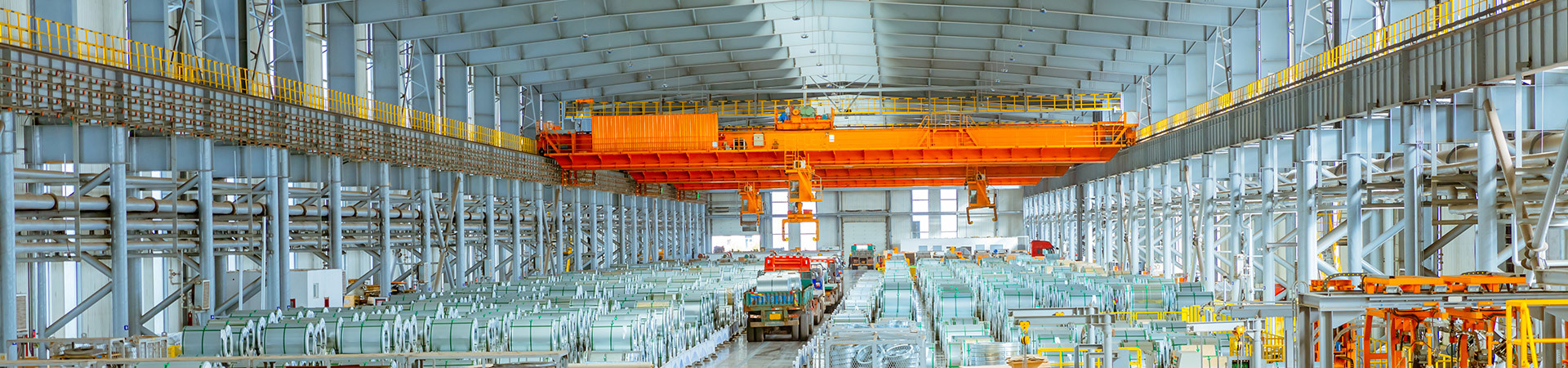
Step into the production workshop of Shandong Xingyuan Machinery Co., Ltd., and the roar of machinery mingles with the flickering sparks of welding, weaving together an industrial symphony. Here, sheets of steel plate go through dozens of processes—cutting, welding, machining, assembly, commissioning, and more—before ultimately emerging as overhead cranes that carry the hallmark of "Xingyuan Quality." From here, they set off for workshops, warehouses, ports, and power stations across China and around the globe.

Precision Blanking: CNC Cutting Marks a Precise Beginning
The manufacturing of an overhead crane starts with sheets of high-quality steel plate. In the blanking workshop at Xingyuan Machinery, workers first pre-treat the steel plates according to design drawings—shot blasting for rust removal and primer coating—laying a solid foundation for the subsequent processes.
As the core load-bearing structure of an overhead crane, the blanking precision of the main girder directly impacts the overall safety and service life of the machine. The company has introduced a large-scale CNC blanking line, utilizing advanced CNC flame cutting and plasma cutting technologies to precisely cut critical components such as the main girder web plates and cover plates. Every steel plate undergoes strict material inspection before blanking begins.
"The precision of CNC cutting can reach the millimeter level. Compared with traditional manual cutting, it not only greatly improves efficiency but, more importantly, ensures dimensional consistency during subsequent assembly," explained the head of the blanking team.


Precision Welding: Automatic Submerged Arc Welding Builds the Framework
The cut steel plates then enter the riveting and welding workshop—the core stage where the "skeleton" of the overhead crane takes shape. Xingyuan Machinery operates multiple welding production lines, including automatic submerged arc welding lines and CO₂ gas-shielded welding lines, ensuring that every weld achieves optimal strength.
The fabrication of the main girder is the most critical part of the welding process. Workers assemble the web plates and cover plates according to the pre-camber curve set during the CNC blanking stage, then weld them using automatic submerged arc welding. This welding method provides deep penetration, high welding speed, and a smooth weld appearance, ensuring that the main girder maintains stable mechanical properties under heavy loads. The connection between the main girder and end carriages adopts a high-strength bolted connection, and the end carriages feature an articulated structure, making the crane's overall operation more stable and reliable.
For heavy-duty cranes, such as the 180/50t metallurgical overhead crane recently produced by the company, the entire crane box structure is welded from Q355 manganese steel plate. This "steel behemoth," with a deadweight of up to 230 tons, places extremely high demands on welding technology. Every weld undergoes rigorous non-destructive testing (NDT) to ensure absolute reliability.
Precision Machining: Turning, Milling, Planing, and Grinding to Achieve Accuracy
The welded structural components proceed to the machining workshop, where they undergo a series of precision machining processes, including turning, milling, planing, grinding, rolling, boring, and drilling. The company possesses 11 large-scale precision machines, enabling it to independently complete the machining of core transmission components such as wheel assemblies, drum assemblies, and gear reducers.
"Apart from electrical components, all other parts of the overhead crane are manufactured in-house," stated the company's production manager. "We implement strict quality control at every machining step to ensure that component precision reaches first-grade quality standards."
The drive system of the bridge traveling mechanism adopts a modular direct-drive design. Key components are precision-machined by CNC machine tools, achieving high precision while reducing energy loss during transmission and significantly improving transmission efficiency. Core components of the hoisting mechanism, such as the drum and reducer gears, also undergo precision machining and heat treatment to ensure a long service life even under high-intensity operations.
Component Assembly: Skillful Integration for Coordinated Operation
The machined parts then enter the assembly workshop, where wheel assemblies, the hoisting mechanism, the trolley traveling mechanism, and the electrical control system are systematically installed onto the bridge structure.
An overhead crane mainly consists of four major modules: the bridge metal structure, the bridge traveling mechanism, the trolley and hoisting mechanism, and the electrical control system. During assembly, workers precisely control the tightening torque of every bolt and the fitting clearance of every bearing. The trolley traveling mechanism along the main girder rail requires repeated adjustment to ensure smooth, jam-free operation.
The electrical control system serves as the "nerve center" of the overhead crane. Xingyuan Machinery equips its cranes as standard with a PLC (Programmable Logic Controller) and an AC variable frequency drive (VFD) system, enabling precise, coordinated movements across all mechanisms. Operation can be selected from cabin control or ground-based wireless remote control to meet different working conditions.

Complete Machine Commissioning: Comprehensive Testing to Ensure Safety
After assembly, the overhead crane must undergo rigorous complete machine commissioning and quality inspection before being delivered to the customer.
The commissioning process covers three major items: no-load test, static load test, and dynamic load test. The no-load test checks the smooth, noise-free operation of all mechanisms; the static load test verifies the strength and stability of the metal structure at 1.25 times the rated load; and the dynamic load test inspects the reliability and braking performance of all mechanisms under dynamic conditions at 1.1 times the rated load.
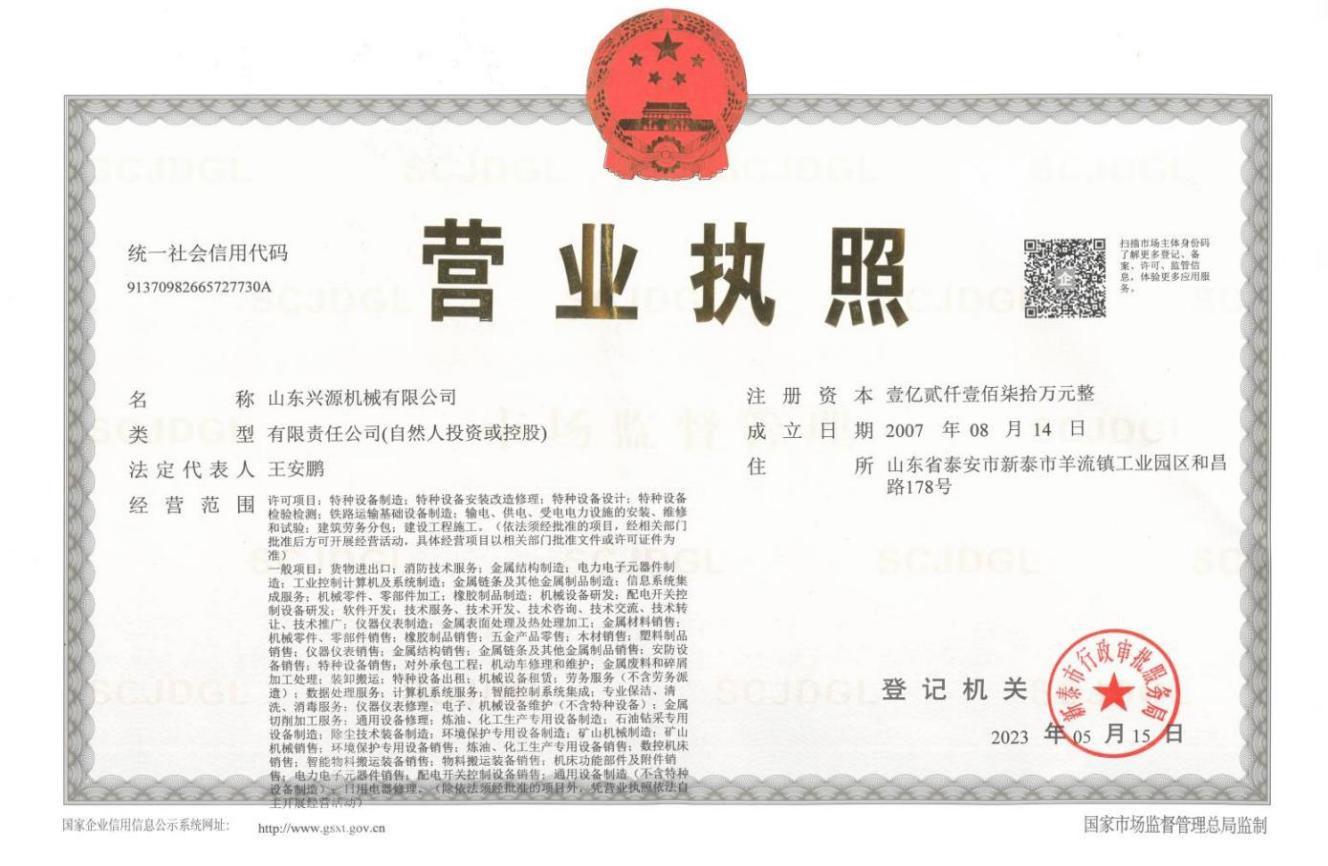
As a national Class A special equipment manufacturing license holder, Xingyuan Machinery strictly adheres to national safety technical specifications for special equipment. Every product leaving the factory undergoes supervision and inspection by authoritative institutions such as the Tai'an Special Equipment Inspection and Research Institute, ensuring the product is safe and reliable.


Quality Commitment: Every Crane Is a Xingyuan Calling Card
From the cutting of a single steel plate to the birth of an overhead crane, Xingyuan Machinery draws on nearly two decades of professional expertise, embedding its corporate spirit of "Striving for Excellence through Sincerity, Achieving Breakthroughs through Innovation" into every process and every piece of equipment.
The company now covers an area of 42,000 square meters, employs 286 staff members (including 46 professional technical personnel), and produces over 8,000 tons of various lifting equipment annually. Its products are sold extensively across 30 provinces and municipalities nationwide and are exported overseas, finding wide application in power stations, ports, the chemical industry, metallurgy, and many other sectors.
"Refinement in management processes, leanness in production manufacturing, excellence in product quality, and competence in talent utilization" — this is the business philosophy to which Xingyuan Machinery has always adhered. Looking ahead, the company will continue to forge every overhead crane with a spirit of craftsmanship, providing safe, reliable, and efficient material handling solutions for customers around the globe.
RELATED BLOG


POPULAR PRODUCTS
CONSULTAR
Copyright : SHANDONG XINGYUAN MACHINERY CO., LTD. Powerby : CEGLOBAL | SEO | Privacy agreement