

A New High-Efficiency, Energy-Saving Choice: Product Analysis of Shandong Xingyuan Machinery's LH Type Double-Girder Overhead Crane
Release time:
2026-05-07
In the field of material handling equipment, how to achieve higher space utilization and lower operating costs while ensuring safety and reliability has always been a core concern for users. Drawing on nearly two decades of crane manufacturing experience, Shandong Xingyuan Machinery Co., Ltd. (hereinafter referred to as "Xingyuan Machinery") integrates lightweight and modular design philosophies to present the LH type electric hoist double-girder overhead crane. With "low headroom, lightweight design, and compact structure" as its core advantages, this product is precisely targeted at working scenarios with limited plant height and strict restrictions on wheel load, providing users with an economical, efficient, and reliable material handling solution.

Product Positioning: The "Golden Choice" for Economical Double-Girder Cranes
The LH type electric hoist double-girder overhead crane is a bridge crane that uses an electric hoist paired with a monorail trolley as its hoisting mechanism, running along rails laid on the twin main girders. Compared with the traditional QD type double-girder overhead crane, the LH type features an optimized and innovative structure—replacing the conventional winch-type reducer plus hoisting motor combination with a CD1/MD1 electric hoist.
This design transformation brings the following significant advantages:
Lighter Deadweight: Compared to QD type cranes of the same tonnage, the deadweight of the LH type equipment is reduced by approximately 25%–35%.
Lower Wheel Load: The reduced building load makes it particularly suitable for old plant renovations or workshops with limited foundation bearing capacity.
Lower Headroom: The compact structural design effectively reduces the building height requirement, saving on civil engineering investment.
Better Cost-Effectiveness: While meeting basic operational requirements, the procurement cost is more competitive.
Due to its relatively simple structure, light deadweight, and low construction cost, the LH type crane is widely used in machining workshops, warehouses, assembly lines, and maintenance areas—scenarios that require moderate lifting capacity (generally 5–20 tons) but have high demands for space utilization and cost-effectiveness. In a sense, the LH type serves as the bridge between the "economical single-girder" and the "heavy-duty QD"—when a single-girder crane cannot meet the lifting capacity or span requirements, yet a QD double-girder crane would be excessive for the task, the LH type is exactly the optimal middle choice.

Core Advantages: Four Highlights That Build Market Competitiveness
Low Headroom Design, Saving Civil Engineering Costs
The greatest structural advantage of the LH type crane lies in its "low headroom" characteristic. Compared with the traditional QD double-girder overhead crane, the LH type effectively reduces the building clearance height requirement through the compact layout of the electric hoist and the main girder.
Taking a 10-ton LH type crane as an example, under the same lifting height, the plant height required by the LH type can be reduced by approximately 800mm–1200mm compared with the QD type. This means:
For new plant construction: The building height can be lowered, directly reducing civil engineering investment.
For old plant renovation: Mechanized upgrading can be achieved within limited height space.
In working conditions where plant height is restricted and a QD double-girder cannot be installed, the LH type is often the best—or even the only—double-girder solution.
Lightweight and Low Wheel Load, Suitable for Aging Plants
The LH type crane adopts a box-section main girder structure, with both the main and auxiliary girders optimized through finite element analysis to achieve optimal steel distribution while ensuring load-bearing capacity.
Taking the LH 10t-22.5m crane produced by Xingyuan Machinery as an example (data source: calculated per GB/T 3811-2008 standard):
Comparison Item | QD Type 10t | LH Type 10t | Difference |
|---|---|---|---|
Total Crane Weight | Approx. 24t | Approx. 18t | Reduced by ~25% |
Maximum Wheel Load | Approx. 13.6t | Approx. 10.5t | Reduced by ~23% |
Hoisting Mechanism Type | Winch-Type Reducer | Electric Hoist | Simplified Structure |
The lower equipment deadweight and wheel load make the LH type crane particularly suitable for workshops with limited foundation bearing capacity or renovation and upgrade projects in aging plants, reducing additional load on the building structure.
Standardized Manufacturing, Reliable Quality
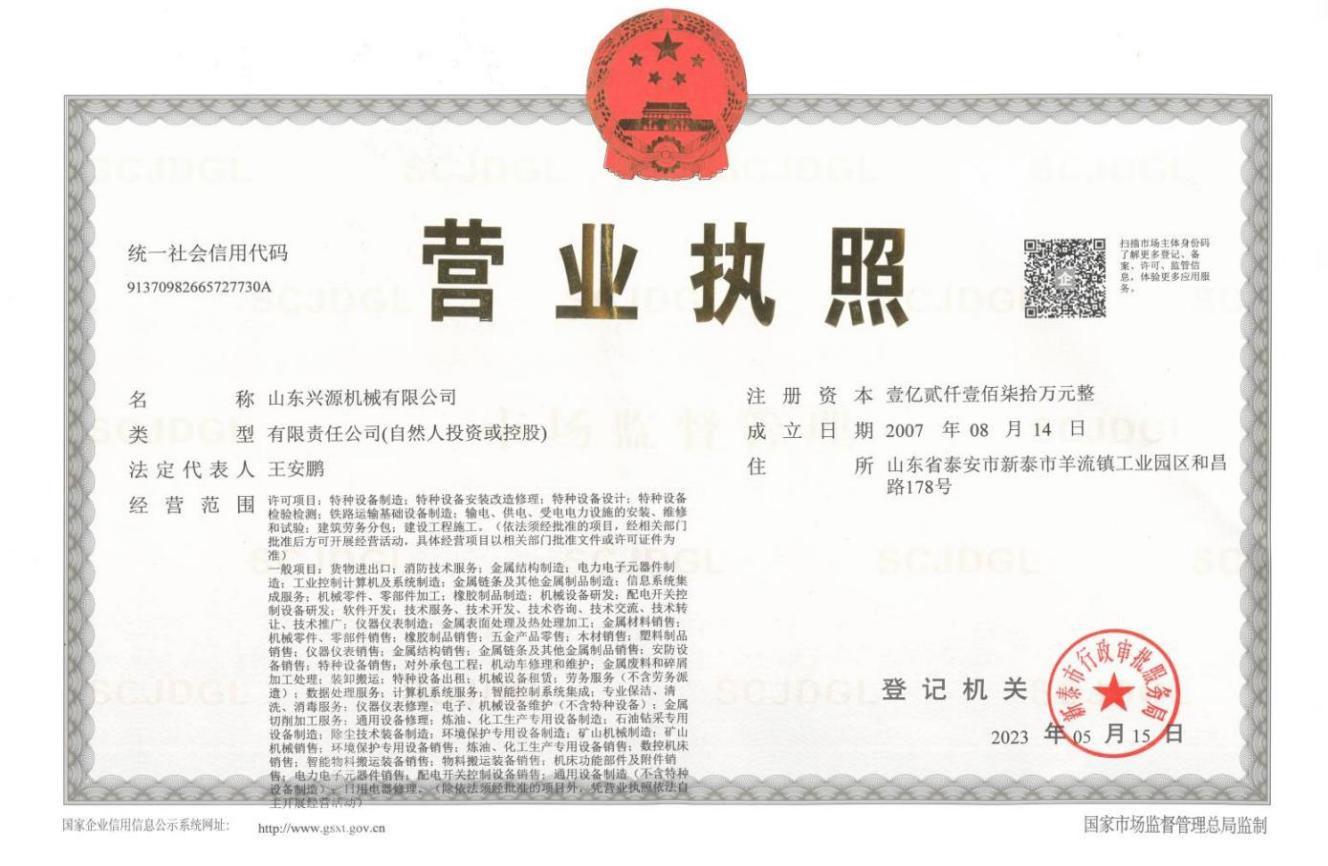
The LH type crane is strictly designed and manufactured in accordance with GB/T 3811-2008 Design Rules for Cranes and JB/T 3695-2008 Electric Hoist Overhead Crane standards, fully demonstrating the technical depth of Xingyuan Machinery as a National Class A special equipment manufacturer.
Main Girder Welding: The main girder is welded using automatic submerged arc welding, with smooth and robust welds subjected to 100% ultrasonic flaw detection.
End Carriage Connection: The main girder and end carriages are connected with high-strength bolts, and the end carriages adopt an articulated structure, making the overall crane operation more stable and reliable.
Trolley Configuration: The trolley frame is of welded steel plate construction, with the electric hoist mounted on the trolley frame. The trolley runs on rails laid along the main girder, featuring a compact structure and convenient maintenance.
Flexible Control, Safety Redundancy
To meet the operational needs of different working conditions, the LH type crane offers multiple control methods for users to choose from:
Control Method | Applicable Scenarios | Advantages |
|---|---|---|
Wired Ground Pendant | Simple tasks, intermittent use | Low cost, intuitive operation |
Wireless Remote Control | Flexible tasks, good operational visibility | Operator can move freely, high safety |
Cabin Operation | All-weather, high-intensity tasks | Wide field of view, comfortable working |
In terms of safety configuration, the LH type crane comes standard with multiple safety devices including an overload limiter, two-stage anti-two-blocking protection, and phase-loss/overcurrent protection. A second set of safety devices can also be added according to customer requirements to enhance reliability.

Manufacturing Process: Craftsmanship That Forges Quality
Every LH type crane that leaves the factory embodies nearly two decades of Xingyuan Machinery's manufacturing expertise:
Raw Material Inspection: All steel undergoes material inspection before entering the factory to ensure compliance with standard requirements.
CNC Blanking: A large-scale CNC blanking line is used for the precise cutting of key components such as the main girder web plates and cover plates.
Automated Welding: The main girder is welded using automatic submerged arc welding, producing smooth and robust welds that pass flaw detection inspection.
Shot Blasting for Rust Removal: Structural components undergo shot blasting treatment, achieving the Sa2.5 standard to ensure coating adhesion.
Precision Machining: Core components such as wheel assemblies and drum assemblies are precision-machined on CNC machine tools.
Complete Machine Commissioning: Before leaving the factory, every unit undergoes three rigorous tests—no-load test, static load test (1.25 times rated load), and dynamic load test (1.1 times rated load).
RELATED BLOG


POPULAR PRODUCTS
CONSULTAR
Copyright : SHANDONG XINGYUAN MACHINERY CO., LTD. Powerby : CEGLOBAL | SEO | Privacy agreement