

A Fortress of Safety Forged in Steel: An In-Depth Analysis of Shandong Xingyuan Machinery's QDY Type Metallurgical Double-Girder Overhead Crane
Release time:
2026-05-07
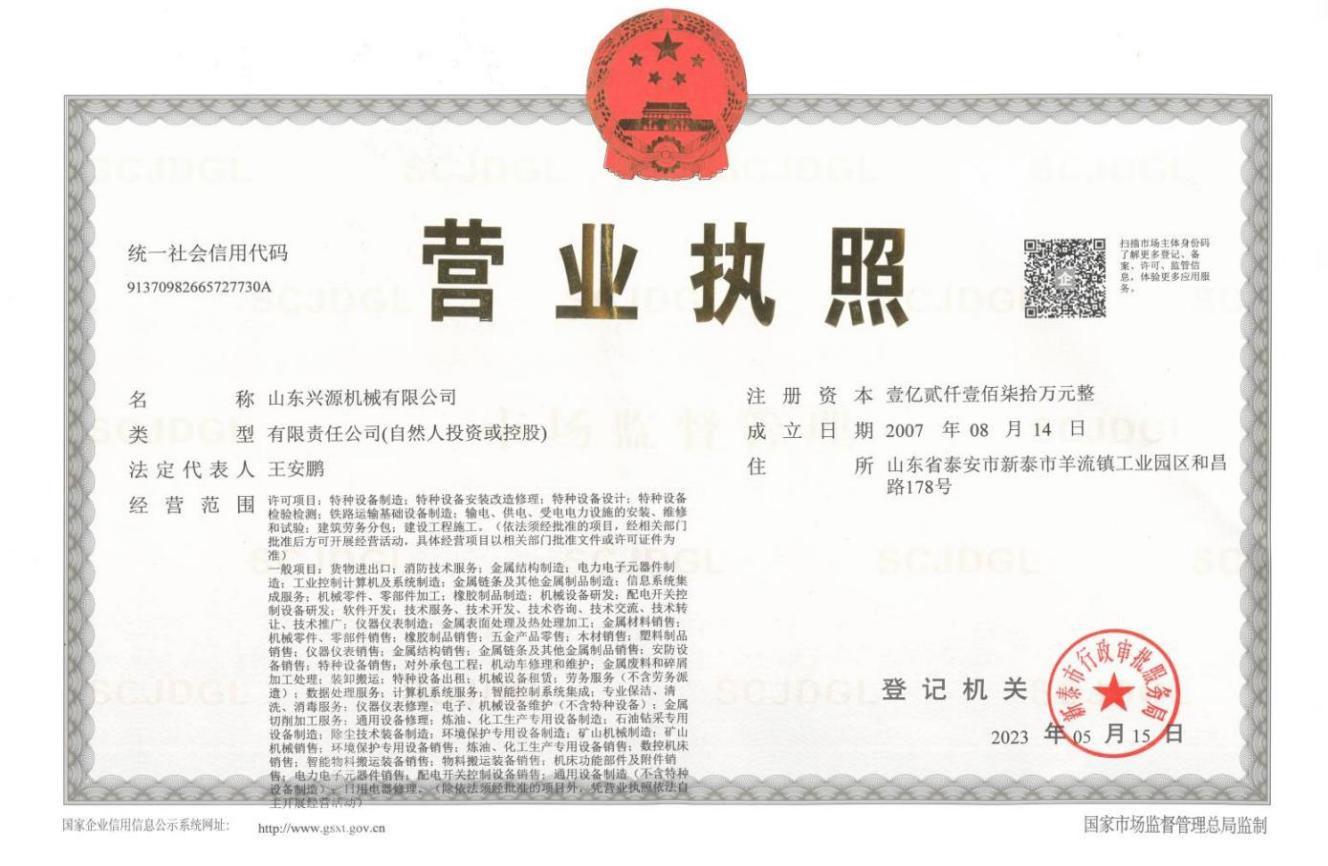
In industries such as steel metallurgy and non-ferrous metal casting, the lifting and transport of molten metal is the most critical and high-risk link in the production process. The safety and reliability of cranes handling molten steel and hot metal directly impact personnel safety and the continuous stability of production. As a holder of the National Class A Special Equipment Manufacturing License, Shandong Xingyuan Machinery Co., Ltd. (hereinafter referred to as "Xingyuan Machinery") draws on its profound technical expertise and ultimate pursuit of safe production to meticulously produce the QDY type metallurgical double-girder overhead crane. This product is strictly designed and manufactured in accordance with the national mandatory standards for metallurgical cranes. With high-temperature resistance, strong redundancy, and high reliability as its core advantages, it builds a solid safety fortress for the steel smelting, casting, and hot processing industries.
Product Definition: Specialized Equipment Born for the "Fiery Industry"
The QDY type metallurgical double-girder overhead crane is a specialized lifting device that has been technically upgraded from the standard QD type overhead crane to address the specific operating conditions of the metallurgical and casting industries—high temperatures, heavy dust, and continuous operation. It serves as the "arterial lifeline" connecting the ironmaking, steelmaking, and continuous casting processes, and is primarily used for lifting and transporting high-temperature materials such as molten metal (hot metal ladles, molten steel ladles), incandescent steel billets, and red-hot ingots.

Core Technologies: Four Dimensions Forging the "Steel Guardian"
High-Temperature Resistant Design: Standing Firm Against Thousand-Degree Furnace Heat
The greatest challenge in a metallurgical workshop comes from the intense thermal radiation of molten steel and hot metal. A 1600°C molten steel ladle radiates enough heat to deform the main girder of an ordinary crane and cause electrical components to fail. Xingyuan Machinery's QDY type metallurgical crane builds a comprehensive thermal insulation barrier across three dimensions: structure, electrical systems, and operation.
Structural Protection:
Insulation Layer Under the Main Girder: High-temperature resistant insulation material is laid along the entire span direction of the crane, effectively blocking thermal radiation from molten steel and ladles onto the main girder's metal structure, ensuring the steel structure maintains stable mechanical properties even in high-temperature environments.
Offset-Rail Box-Section Girder Structure: The main girder adopts an offset-rail design, with the trolley rail positioned directly above the main girder web plate, keeping the main girder body away from the heat radiation zone and reducing the risk of thermal deformation.
Electrical Protection:
High-Temperature Resistant Insulated Cables: All power and control cables are made of high-temperature resistant silicone rubber insulation, enabling stable operation in sustained high-temperature environments.
Motor Thermal Protection System: The main hoisting motor has a built-in temperature sensor that automatically triggers an alarm and restricts operation when the motor temperature exceeds the preset threshold.
Industrial Cooling Fans in the Electrical Room: The main girder electrical room is equipped with industrial cooling fans for forced air cooling, ensuring core components such as the PLC and VFD operate at suitable temperatures.
Cabin Protection:
The operator cabin features tempered glass with a heat-insulating protective coating, with optional heating and air conditioning, providing the operator with a comfortable and safe working environment while reducing the risk of operational errors.
Overall Temperature Resistance: The equipment can operate stably in ambient temperatures ranging from -10°C to +60°C, with key components capable of withstanding direct thermal radiation from incandescent materials.
Gantry Hook Configuration: Precision Docking with Molten Steel Ladles
The load-handling device of the QDY type metallurgical crane is not an ordinary hook, but a specially designed gantry hook (lifting beam)—featuring two lifting arms arranged at a fixed spacing that precisely match the trunnions on both sides of the molten steel ladle.
Design Features:
The lifting beam can be designed with either fixed or adjustable spacing to accommodate ladle transfers of different specifications.
A load rotation function can be configured to meet the tilting requirements during molten steel pouring.
Main and auxiliary hoist coordination: the auxiliary hoist assists in completing operations such as ladle tipping and slag treatment.
Precision Control: Heavy Load, Slow Speed, Safe Positioning
In molten metal handling, "stability" matters more than "speed." Xingyuan Machinery's QDY type crane is equipped with advanced speed regulation and positioning systems:
Variable Frequency Speed Control Technology: Enables slow speed under heavy load and fast speed under light load, with smooth, impact-free operation across hoisting, bridge travel, and trolley travel movements.
Optional Electronic Anti-Sway System: Addresses the challenges of liquid metal tending to sway during lifting and the difficulty of precise positioning.
Optional Zero-Speed Hovering Function: Allows stable hovering during the lifting process, facilitating pouring operations for workers.
High-Precision Electronic Scale: Displays the load weight in real time within the cabin, activates an overload alarm, and can record and print data.

Manufacturing Process: Craftsmanship That Forges Quality
Every QDY type metallurgical crane that leaves the factory embodies nearly two decades of Xingyuan Machinery's manufacturing expertise and deep understanding of metallurgical safety:
Raw Material Inspection: All steel undergoes material inspection and high-temperature resistance testing before entering the factory.
CNC Blanking: A large-scale CNC blanking line is used for precise cutting, ensuring the dimensional accuracy of the main girder web plates and cover plates.
Automated Welding: The main girder is welded using automatic submerged arc welding, with 100% ultrasonic flaw detection performed on the welds to ensure they are defect-free.
Shot Blasting for Rust Removal: Structural components undergo shot blasting treatment, achieving the Sa2.5 standard to ensure coating adhesion in high-temperature environments.
Insulation Layer Installation: High-temperature resistant insulation material is installed beneath the main girder, with field measurements confirming effective reduction of main girder temperature rise.
Complete Machine Commissioning: Before leaving the factory, every unit undergoes rigorous no-load testing, static load testing (1.25 times rated load), and dynamic load testing (1.1 times rated load), and is subject to supervision and inspection by a special equipment inspection authority.
RELATED BLOG


POPULAR PRODUCTS
CONSULTAR
Copyright : SHANDONG XINGYUAN MACHINERY CO., LTD. Powerby : CEGLOBAL | SEO | Privacy agreement